
A tidy configuration makes the data readable over time.
Analytics
Setting up Google Analytics for AI traffic
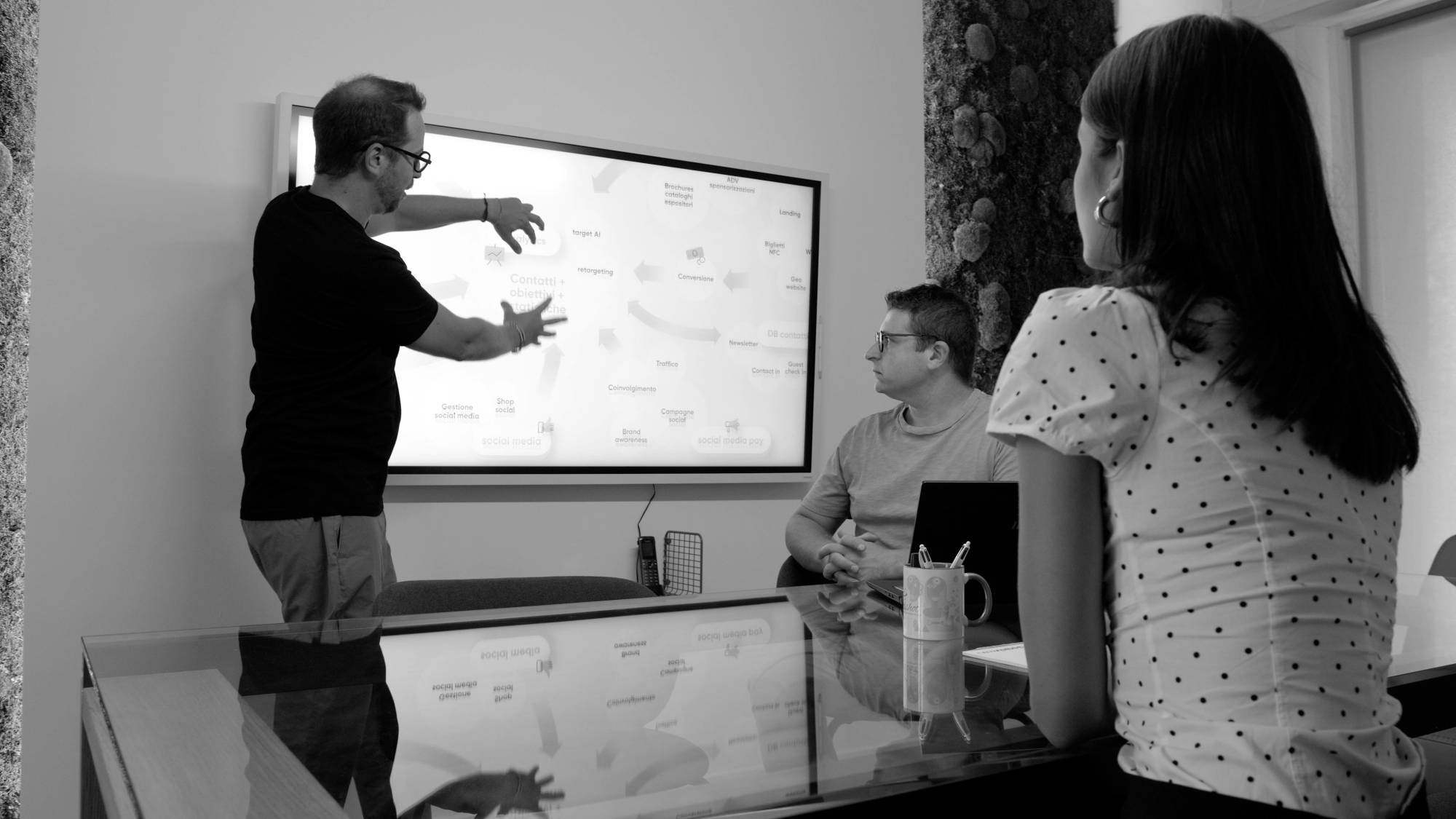
In Google Analytics you set up AI traffic by creating a custom grouping of sources that includes the domains of AI assistants, to compare with the standard channels. The details depend on how your website is configured and on privacy and cookie rules. For a company in Como or Brianza we check it case by case.
Steps
What is checked



- Sources and domains of AI assistants to group
- Events and goals linked to enquiries and requests
- Cookie consent and compliance with regulations Privacy and cookies
- Periodic reports comparing channels
AI data remains partial: some visits do not show where they came from.
That is why we read AI visits together with the other sources, for companies in Milan, Cantù and Lugano. For legal aspects of privacy and cookies we refer you to your own adviser.

There is no fixed time for the effects of AIO: it depends on the starting point, the competition and updates to AI models. For companies in Como and Brianza the team in Cantù proposes ongoing observation, with no promised deadlines.
The AIO report is agreed with the NewVisibility team in Cantù and can include citations, sources, visits from AI and recommended actions. For a company in Como it describes the situation and proposes priorities, without promising results.
AIO results are not guaranteed because AI generates different answers with every request and models change without notice. No agency, in Como or Milan, controls what an assistant cites: all that can be guaranteed is method and transparency.
Faced with "best company in Como", AI usually suggests a few names, justifying them with the information it finds on the web. Clarity of content, consistency of data and reputation all count. There is no single verdict and nobody can guarantee being named in the answers, in Como or in Brianza.
The frequency of the AIO audit depends on the sector, changes to the website and the company's initiatives: there is no deadline that suits everyone. For a company in Como or Brianza with frequent news it makes sense to check more often, always using the same questions to compare results.