A fashion brand needs to connect its management system, its PIM and, where there is one, its e-commerce to the website. At NewVisibility, a web agency in Cantù, in the province of Como, we deliver ERP, CRM and PIM integration through APIs: product data is synchronised automatically, in several languages too, with no diverging versions across channels.
From management system to website, with no re-keying
We map your existing flows, identify the main source of each piece of data and make it available online automatically, reducing errors and duplicates. If you sell online, the e-commerce can have separate price lists for B2B and export, connected to the management system. Find out how we work with the fashion sector.


The ERP management system, which runs orders and stock; the PIM, which holds product descriptions, images and translations; and the CRM, where customer records and history live. With APIs, data moves from one system to another without being copied by hand.
The management system remains the source of the data: you update a piece of information once and find it already aligned on the website and the e-commerce. That way collections, sizes, colours and availability are the same on every channel.
Yes. Translations live in the PIM together with the rest of the product information and the website publishes them automatically, with no separate versions to align by hand.
An e-commerce synchronised with the management system
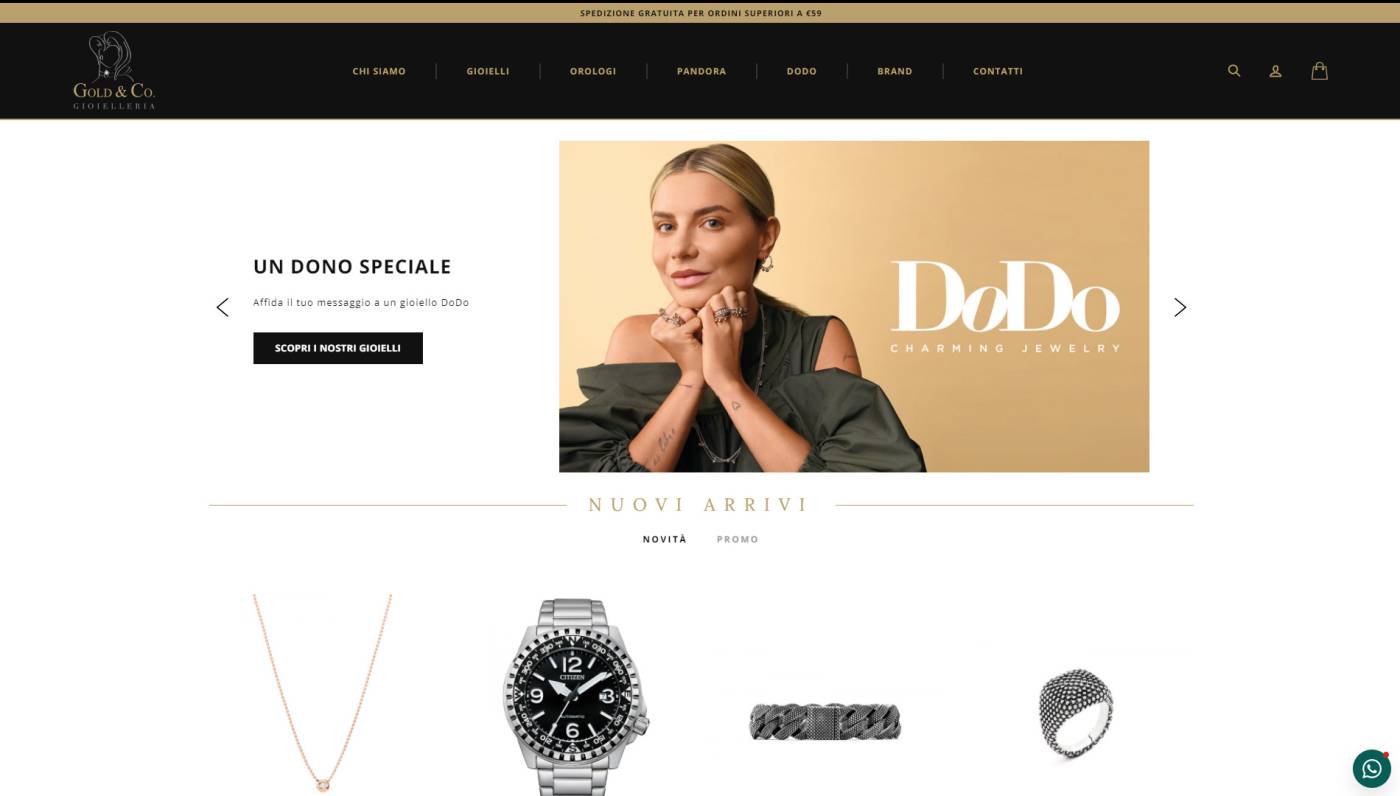
For a jeweller we built an e-commerce synchronised with its management software: accurate information in real time and orders handled from a single stock.
Want to connect your fashion brand's website to your systems?
Tell us which tools you use for collections, stock and customers: from Cantù we work with brands in Como, Milan and Lugano.
The ERP, the PIM and the website are connected via API: each garment carries its sizes, colours and variants, with codes and availability read from the management system. You update a variant once and find it aligned on the website and the e-commerce site, with no duplicates. We build it in Cantù for brands in Como, Milan and Lugano.
By connecting the management system and the PIM to the website via API, the seasonal collection change does not require re-entering garments one by one: items, variants, images and translations for the new season arrive online already organised, and the previous collection is updated or archived according to your rules.
The ERP, which governs orders and stock, is connected to the website and the e-commerce site via API. The stock availability of every size and colour is read from the management system and shown online always up to date, so customers see what is really there, from a single warehouse.
The e-commerce site and the ERP are connected via API: every fashion e-commerce order reaches the management system with the customer's details and the items, sizes and colours chosen, and stock is updated accordingly. No orders retyped by hand and no duplicates between online shop and administration.
A PIM for fashion collects garment descriptions, materials, images, size guides and translations in a single repository. Connected to the website via API, it publishes them automatically on the website and the e-commerce site, while the management system continues to govern codes, prices and stock.
A reserved area for buyers and agents is a password-protected section of the website connected to the management system and the PIM. Each user sees the collections, price lists and documents you decide to share with them, always aligned with your company data, with no catalogues to send by hand.
The systems are integrated via API: contacts, enquiries and purchases collected online reach the fashion brand's CRM without manual entry, and customer information flows back to the website where it is needed. Sales and communication teams work on a single, up-to-date customer database.
The e-commerce site is connected to the management system via API: the management system remains the source of prices and the website applies the B2B, retail and export price lists set for each type of customer and market. You update a price once and it is aligned on every channel.
The cost of ERP integration for fashion depends on how many systems you connect (management system, PIM, CRM, e-commerce), the APIs available, the number of items and variants, and the languages and price lists to manage. We start from an analysis of your processes and propose a clear quote, also in phases.
Check whether the systems integration agency starts by analysing your data flows, develops the APIs with an in-house team, can handle variants, translations and channel price lists and offers support after release. NewVisibility works this way from Cantù, in the province of Como, for brands in Milan and Lugano.