
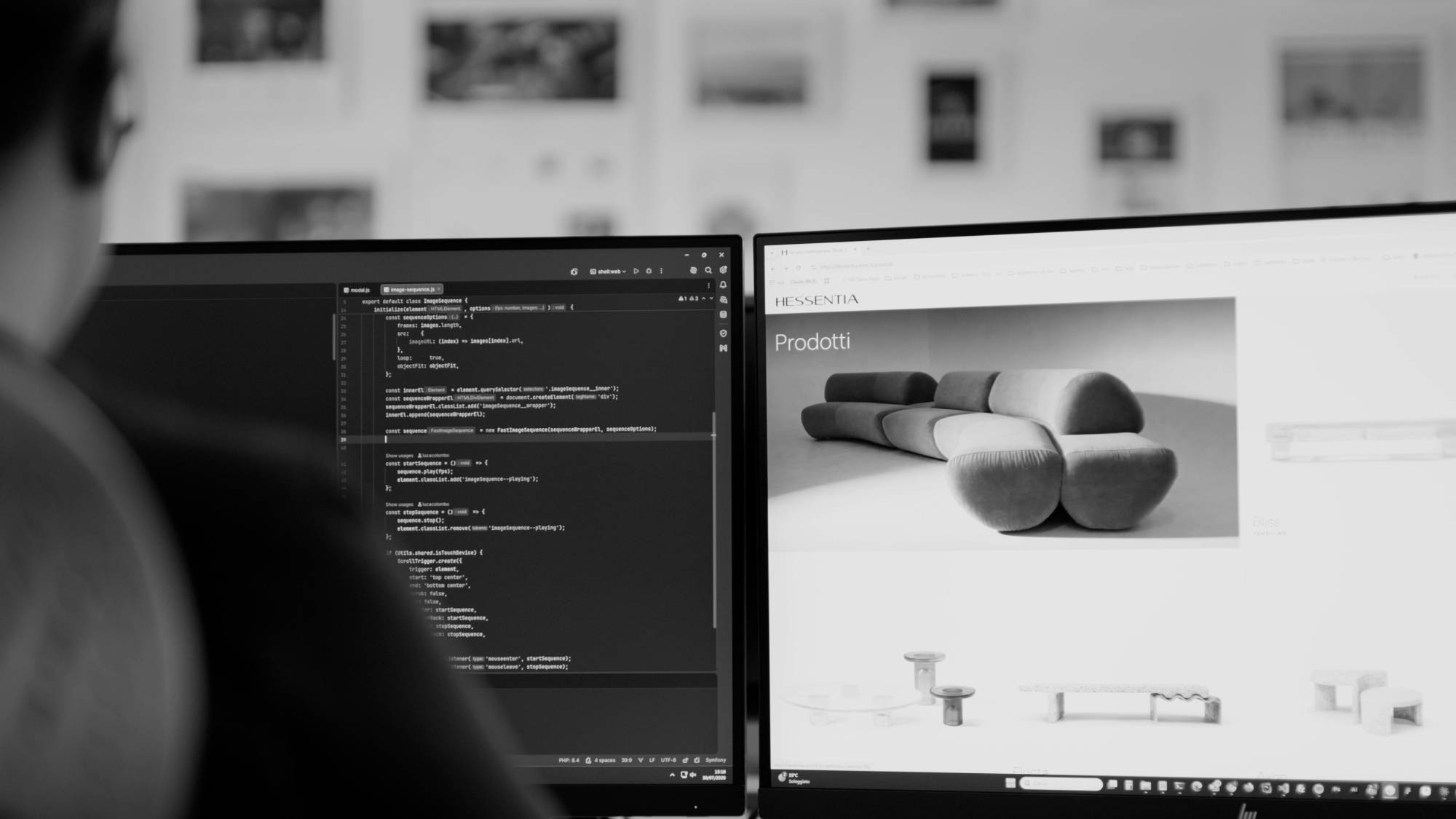
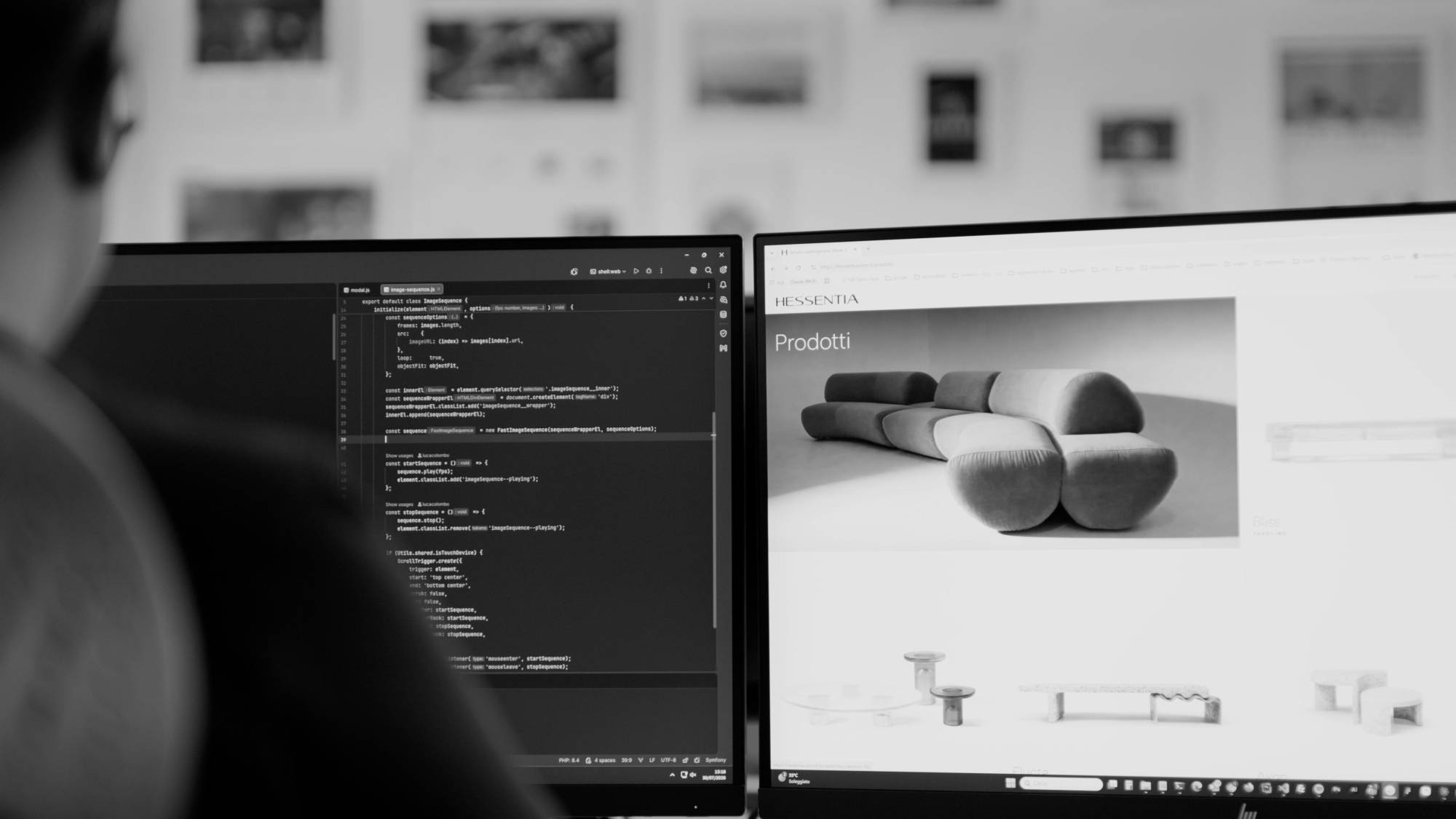
A PIM for a furniture company collects product information in a single repository: descriptions, technical sheets, dimensions, finishes, images and translations. Connected to the website via API, it publishes them automatically, so every collection is presented in the same way in every language and on every channel, with no different versions to align by hand.
Why the PIM matters in furniture
A sofa or a modular system carries a lot of information: dimensions, materials, finishes, instructions, certifications, lifestyle photos. If it lives in scattered files, you risk publishing outdated data or missing translations.
With a PIM each piece of data is entered once and reaches the website, the reserved area and the price lists. The ERP continues to govern codes and prices, the PIM the content. Discover our integration for furniture companies.
Want to organise your furniture product sheets in a PIM?
Tell us where your product information is today: we help you connect it to the website, for companies in Como, Brianza, Milan and Lugano.
The website's forms are integrated with the CRM via API: every furniture quote request reaches your customer records together with the product or collection of interest. Private customers, dealers and designers are recognised, and your sales team finds everything in one place, with no duplicates.
The cost of ERP integration for furniture depends on how many systems you connect (ERP, PIM, CRM, configurator, e-commerce), the APIs available, the number of products and variants and the complexity of price lists and finishes. We start from an analysis of your processes and propose a clear quote, also in phases.
Check whether the ERP integration agency starts by analysing your data flows, develops the APIs with an in-house team, understands how collections, finishes and price lists are managed and offers support after release. NewVisibility works this way from Cantù, in the province of Como, for companies in Brianza, Milan and Lugano.
The most common mistakes when integrating a furniture company's management system and website are not deciding which system governs each piece of data, retyping variants and finishes by hand, skipping field mapping and going live without testing. An initial analysis of data flows avoids duplicates and inconsistent information.